Traditional bathroom design has remained a favorite among homeowners for good reason. It blends timeless elegance with practical functionality, creating spaces that feel both welcoming and enduring. Unlike trendy aesthetics that fade within a few years, traditional bathrooms draw from historical design principles and proven materials that stand the test of time. Whether you’re renovating an older home or simply prefer the warmth of classic style, understanding the core elements of traditional design helps you make informed decisions about layout, fixtures, and finishes. This guide walks you through what defines traditional bathrooms, the essential elements that make them work, and how to achieve the look without very costly.
Table of Contents
ToggleKey Takeaways
- Traditional bathroom design prioritizes timeless elegance, quality materials, and restrained simplicity over trendy elements that fade quickly.
- Essential traditional fixtures include pedestal sinks, clawfoot tubs, cross-handle faucets in bronze or brushed nickel, and simple hardware that ages gracefully.
- A restrained color palette of whites, soft grays, pale blues, and creams combined with subway tile and wainscoting defines authentic traditional bathroom aesthetics.
- Smart budgeting for traditional bathrooms means investing in durable fixtures and tile while saving on decor, with modest renovations ranging from $1,500–$3,000 and full renovations from $8,000–$15,000.
- DIY-friendly upgrades like fresh paint, new hardware, and simple tile installation can dramatically transform a traditional bathroom without major expense.
What Defines Traditional Bathroom Design
Traditional bathroom design draws from design periods roughly spanning the late 1800s through early 2000s, emphasizing symmetry, quality materials, and timeless proportions. The defining characteristic is restraint, nothing feels overstated or trendy. Instead, traditional bathrooms rely on classic lines, solid construction, and finishes that improve with age.
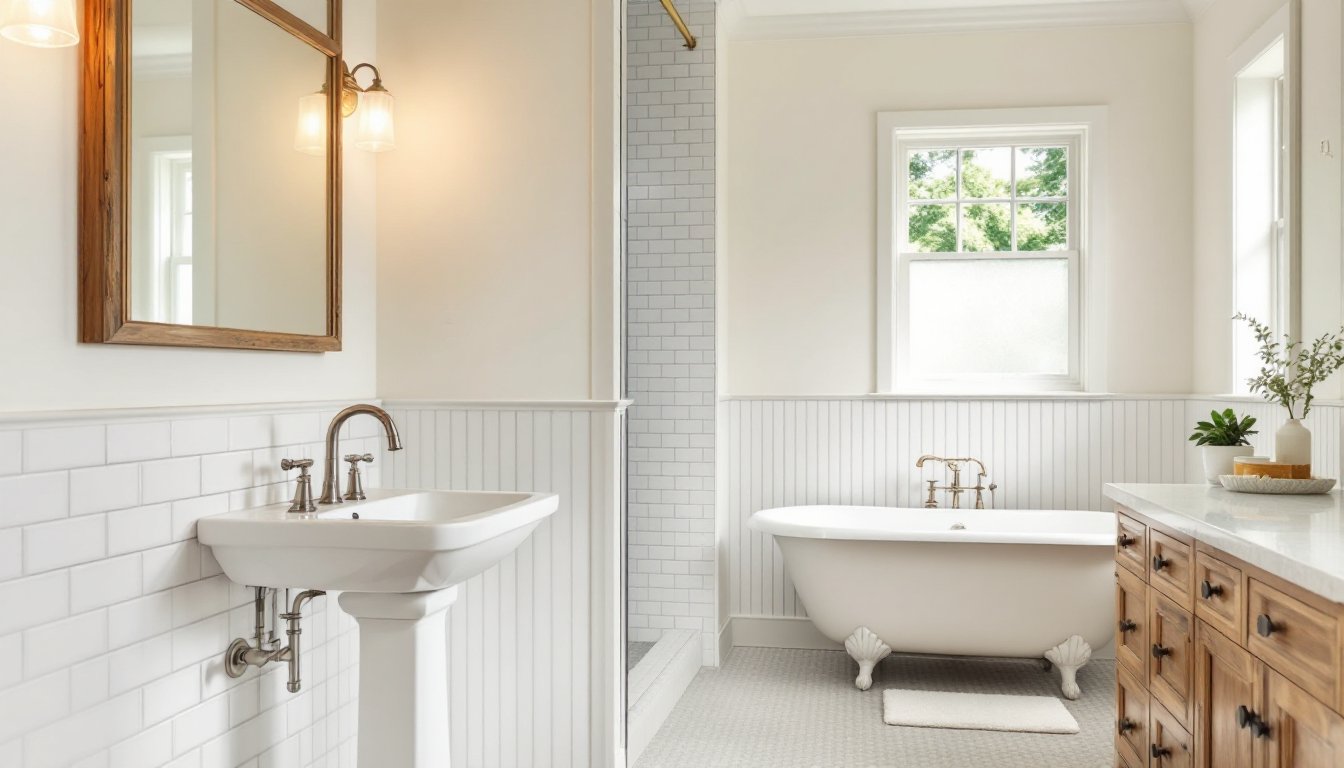
A traditional bathroom prioritizes substance over novelty. You’ll see pedestal sinks instead of floating vanities, clawfoot tubs or alcove-style soaking tubs instead of jetted soaking systems, and wainscoting or subway tile that recalls early 20th-century bathrooms. The hardware is often bronze or brushed nickel, metals that feel substantial and wear gracefully. Cabinetry, when present, features raised panels and simple lines rather than slab-front contemporary styles.
Color plays a supporting role. Whites, soft grays, pale blues, and warm creams dominate, with perhaps a contrasting accent like black fixtures or dark tile. The overall impression is calm and cohesive, never chaotic or aggressively decorated. Traditional design respects the room’s function, a bathroom is a place to clean up and take care of yourself, not a statement gallery. That clarity of purpose is what makes traditional bathrooms feel so restful.
Essential Elements of Classic Bathroom Aesthetics
Fixtures, Finishes, and Hardware
Fixture selection makes or breaks a traditional bathroom. A pedestal sink with a visible cast-iron or ceramic base is the poster child of traditional design. If space is tight, a wall-mounted sink with a classic basin shape works equally well. A wall-mounted approach saves floor space while maintaining that legible, unfussy silhouette. Look for designs that echo antique forms, simple curves, minimal ornamentation.
For the tub, a classic clawfoot tub remains the gold standard, but it’s not required. An alcove tub with traditional deck-mount faucetry and a simple skirt or surround does the job. The faucet itself deserves attention: opt for a deck-mount or wall-mount faucet with cross-handles (also called cross-knobs), which telegraphs tradition instantly. Materials matter, solid brass or bronze bodies with ceramic or porcelain cross-handles outlast cheaper alternatives and look better as they age.
Hardware on cabinet doors and drawers should be simple and proportional. Think cup pulls, ring pulls, or bar pulls in brushed bronze or polished nickel, nothing oversized or novelty-shaped. A single pull style throughout the room creates visual unity.
For lighting, sconces flanking the mirror feel classically residential. Pair them with a simple flush-mount ceiling fixture or a small chandelier if the room can accommodate it. Avoid modern vanity strips with integrated LEDs: instead, choose fixtures with modest proportions and warm color temperature (2700K or slightly warmer).
Color Palettes and Materials
Traditional bathrooms rely on restrained color. White is the baseline, on walls, cabinetry, and larger surfaces. White reads as clean and calm, and it makes a small bathroom feel larger. Pair white with soft accent colors: pale blue (reminiscent of 1920s tile), warm gray, or cream. Avoid stark whites that feel cold: instead, choose ones with subtle warm undertones.
Tile is the workhorse material. Subway tile, a 3×6 inch rectangular format, is traditional both in heritage and appearance. It’s affordable, durable, and available in countless finishes (glossy, matte, textured). Install it in a running bond pattern (staggered rows) rather than a grid for authentic traditional feel. For flooring, hexagonal tiles, small squares, or simple rectangular formats work well. Pair light-colored wall tile with slightly darker flooring to anchor the room.
Wainscoting (tile or beadboard running 36–48 inches up the wall) is a signature traditional feature. It protects walls from moisture, adds visual interest, and references early 20th-century bathrooms. A simple chair rail or trim separates the wainscoting from paint above.
Flooring materials suit the climate. In moist climates, ceramic or porcelain tile is reliable and classic. Marble conveys luxury but requires sealing and maintenance. Vinyl or linoleum in traditional patterns work for budget-conscious projects, though they don’t have the longevity of tile. Avoid glossy finishes on floors, they’re slippery when wet.
Wood accents warm traditional bathrooms. Vanity cabinetry in natural wood tones, a simple wooden mirror frame, or open shelving with vintage hardware add warmth without clashing with the cool tones of tile and porcelain. Ensure proper ventilation (exhaust fans running 20–30 minutes after showers) to prevent moisture damage to wood.
Designing Your Traditional Bathroom on a Budget
Building a traditional bathroom on a tight budget requires smart prioritization. Spend on items you can’t easily replace later, fixtures, tile, and cabinetry. Save on decor elements and finishes you can upgrade gradually.
Fixtures represent 30–40% of a bathroom budget. Pedestal sinks and simple clawfoot tubs are surprisingly affordable when sourced from home improvement retailers rather than specialty plumbing suppliers. A basic pedestal sink runs $150–$300: a traditional cast-iron clawfoot tub with faucetry, $600–$1,200. Compare options across outlets: pricing fluctuates with material costs and seasonal sales.
Tile selection determines both cost and longevity. Subway tile and simple geometric patterns are the cheapest traditional tile formats. Expect to pay $3–$8 per square foot for basic ceramic or porcelain (materials only). Complex layouts, hand-cut details, or premium marble multiplies costs. Pro tip: use traditional tile only where moisture demands it (shower surround, floor, lower walls), and paint upper walls, a $40 paint can substitutes for $300 in tile while still achieving the look.
Cabinetry can blow a budget quickly. If the existing vanity is solid, refinish it. A fresh coat of paint and new hardware costs under $100 and transforms the room. If replacement is necessary, stock cabinetry from home improvement centers runs $400–$800 for a basic 24–30 inch wide vanity, versus $2,000+ for semi-custom options.
Make interior design trends decisions wisely by focusing on elements that define traditional style: classic fixtures, simple tile, and restrained color. Skip trendy add-ons, they’ll look dated in five years. Thrift stores and salvage yards offer affordable vintage hardware, mirrors, and fixtures. A $20 estate-sale mirror with a simple wood frame beats a new reproduction frame for authenticity.
Accounting for local labor rates, material availability, and your DIY skill level keeps costs realistic. Painting, simple tile installation, and hardware swaps are manageable solo projects. Plumbing rough-in, venting, and electrical work often demand licensed professionals and permits, factor those into budget planning. Check local codes: bathroom ventilation and waterproofing rules vary by jurisdiction. Many jurisdictions require exhaust fans venting outside (not into an attic), and some mandate professional installation of certain elements. Researching design inspiration through established sources helps you understand which upgrades yield the best return on investment.
A modest traditional bathroom renovation, paint, new hardware, and a tile backsplash, runs $1,500–$3,000 in labor and materials. A full renovation with new fixtures, flooring, and cabinetry ranges $8,000–$15,000, depending on scope and region. Exploring styles through design sites helps clarify priorities before spending. Start with high-impact, low-cost changes: paint the walls, upgrade hardware, add simple wainscoting. Build from there as budget allows.
Conclusion
Traditional bathroom design endures because it prioritizes timeless materials, functional beauty, and restraint. A well-designed traditional bathroom works harder, costs less to maintain, and never feels dated. Whether you’re tackling a full renovation or refreshing existing fixtures, the principles remain the same: choose quality basics, respect simplicity, and let good proportions and honest materials speak for themselves. Start with one or two signature elements, a pedestal sink or a classic tile pattern, and build your traditional space intentionally. The result is a bathroom you’ll enjoy for decades, not a rushed project you’ll want to redo in three years.