Bathroom trends move faster than you’d think. What looked cutting-edge in 2024 is either holding strong in 2026 or already shifting into something new. If you’re planning a bathroom refresh, whether it’s a full remodel or strategic updates, understanding which 2024 trends have real staying power matters. This guide walks through the design trends that defined 2024 and explains which ones work as lasting investments for your home, not fleeting Instagram moments. You’ll find practical takeaways for color, materials, fixtures, and layouts that make your bathroom feel both current and timeless.
Table of Contents
ToggleKey Takeaways
- Spa-inspired minimalism with neutral palettes and intentional spacing remains the dominant bathroom design trend, creating functional spaces that are easier to clean and feel larger.
- Bold accent colors like deep greens, terracotta, and warm blacks work best when applied to a single focused area—such as behind the vanity—rather than overwhelming the entire bathroom.
- Natural materials including reclaimed wood, stone, cork, and ceramic age better and prove more durable than synthetic alternatives, making them worthwhile investments for long-term bathroom design.
- Smart bathroom technology like humidity-sensor exhaust fans and heated floors solves practical problems such as mold prevention and improved safety, with retrofit options making upgrades accessible.
- Strategic lighting design with sconces flanking mirrors and separate ambient lighting eliminates harsh overhead-fixture bathrooms while larger statement mirrors visually expand small spaces.
- A combination of closed storage for clutter and open shelving for curated daily-use items creates organized, visually interesting bathrooms without compromising the minimalist aesthetic.
Spa-Inspired Minimalism Takes Center Stage
The bathroom-as-sanctuary trend isn’t new, but 2024 cemented it as the dominant design language. Instead of fussy décor or color overload, spa-inspired minimalism strips the bathroom to its essentials and makes each element count. Think clean lines, neutral base colors (soft whites, warm grays, pale taupe), and a focus on materials and textures rather than ornament.
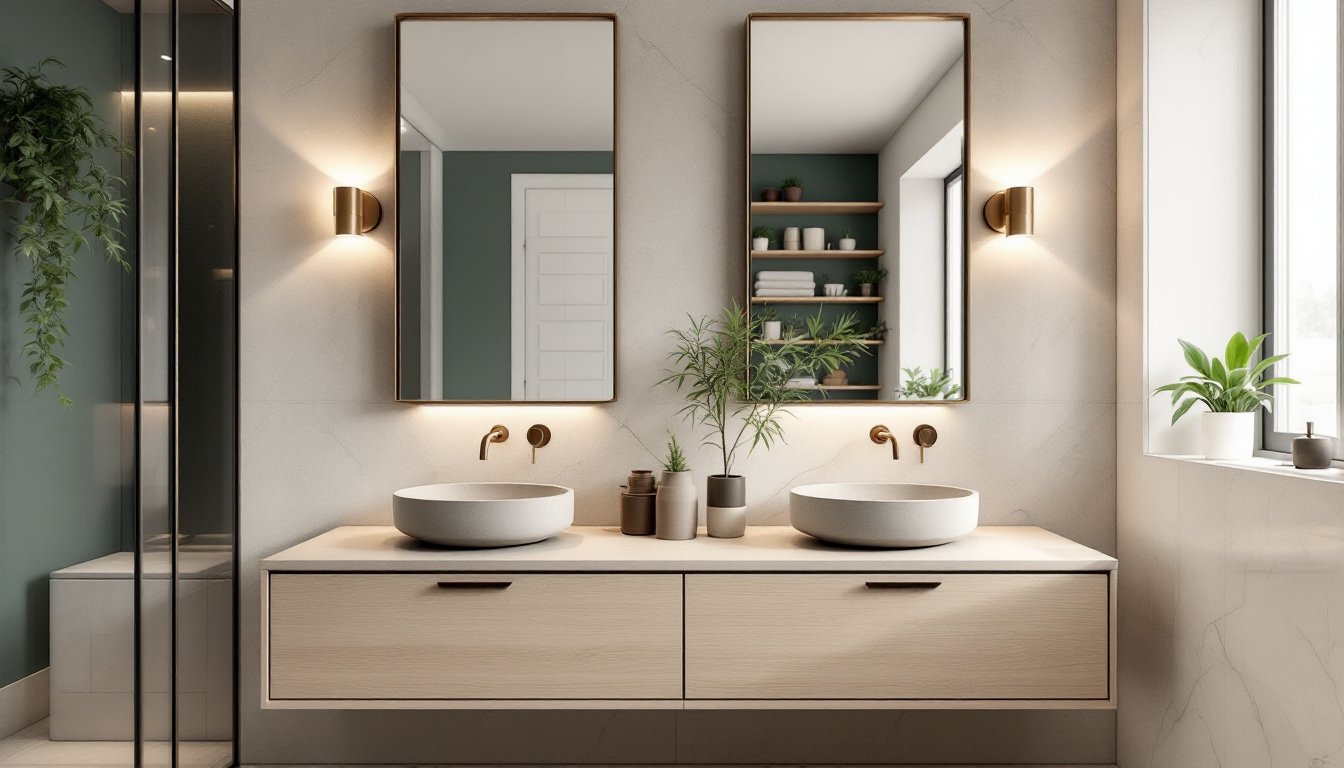
What makes this trend practical is that it’s deeply functional. A minimalist bathroom is easier to clean, feels larger than it actually is, and creates a calm morning and evening routine. The key isn’t emptiness, it’s intentional spacing and considered materials. A simple concrete sink, light-wood vanity, or brushed-steel fixtures become the focal points instead of competing with patterned tile or cluttered shelving.
If you’re considering this approach, start by choosing a neutral palette and committing to it. That means limiting paint colors to one or two, selecting fixtures in a single finish (matte black, brushed nickel, or oil-rubbed bronze), and choosing materials that will wear well and age gracefully. Stone, marble, and solid wood are worth the investment because they look better as they age rather than worse. This minimalist foundation also gives you room to shift accents, a plant, a linen shower curtain, or a simple painting, without visual chaos.
Bold Color Palettes and Accent Walls
While minimalism dominates, bold color is having a genuine moment, and it’s not just navy blue. Deep greens, terracotta, warm blacks, and even mustard are showing up in bathrooms as accent walls, vanities, and trim. The difference from previous color trends is restraint: these colors appear in one focused area, not everywhere.
A common approach is painting the wall behind the vanity or a single wall while keeping other surfaces neutral. This gives you the personality boost of color without overwhelming the small space. Some bathrooms are also choosing darker, richer colors for vanity cabinetry while keeping walls light, the reverse strategy that’s equally striking.
If bold color appeals to you, test your choice first. Paint a section of wall and live with it for a week under different lighting conditions. Bathroom lighting is typically artificial and bright, which can shift how colors read. Top Interior Design Trends Shaping Homes in 2025 show that color confidence, choosing one strong hue and committing to it, is trending over timid pastels. Work with a paint sample and a color consultant at your local paint supplier if you’re uncertain: they can show you how a color behaves in your specific space. Primer is essential when going bold: quality paint and two coats ensure the color stays true and coverage is complete.
Natural Materials and Sustainable Fixtures
Sustainability isn’t just an environmental talking point, it’s reshaping which materials homeowners choose and why. In 2024 and beyond, natural materials like reclaimed wood, stone, cork, and ceramic are preferred over purely synthetic options. Beyond aesthetics, there’s a practical reason: these materials age better and are often more durable than cheaper alternatives.
Reclaimed wood vanities are increasingly popular, and for good reason. Wood in a bathroom requires proper sealing and ventilation, but when done right, it ages beautifully and brings warmth that laminate can’t match. Cork flooring is waterproof when sealed properly and offers natural cushioning underfoot. Ceramic tile, especially larger format tiles with minimal grout lines, reduces maintenance and water infiltration points.
Fixtures are shifting too. Water-efficient faucets and showerheads that meet WaterSense certification deliver the same performance with lower flow rates. Interior Design Trends Guide coverage of sustainable choices emphasizes that eco-conscious fixtures often cost less over time due to lower water bills. Brass, bronze, and oil-rubbed bronze finishes continue to dominate over polished chrome, partly because they age more gracefully and hide water spots better. If you’re replacing fixtures, choose solid brass or stainless steel bodies rather than plated versions that can flake or chip.
Smart Bathroom Technology for Daily Convenience
Heated floors, ventilation fans with humidity sensors, and smart mirrors are transitioning from luxury additions to mainstream expectations. The appeal isn’t complexity, it’s solving real problems. A humidity-sensor exhaust fan prevents mold before it starts. Heated floors feel luxurious but also reduce morning shock in cold climates and dry the floor faster after a shower, improving safety.
Smart mirrors with integrated lighting and defogging aren’t necessary, but they’re increasingly affordable. The key is choosing systems that integrate with your existing setup rather than requiring an entirely new installation. Retrofit options, like adding a simple timer to an existing exhaust fan or installing a heated mat under existing flooring, make these upgrades accessible without a full remodel.
Before committing to smart tech, consider durability and support. Fixtures and fans from established manufacturers are more likely to have parts available and firmware updates in five or ten years. Waterproofing is critical: any electrical element in a bathroom must be installed by a licensed electrician following your local electrical code (NEC standards). Bathrooms are classified as wet areas, and improper electrical installation creates serious safety hazards. If you’re not comfortable with the technical aspect, hire a professional rather than attempting it yourself.
Statement Lighting and Mirrors as Design Features
Lighting in a bathroom serves dual purposes: task lighting (around the mirror) and ambient lighting (overall room). In 2024, these two functions are being addressed with intention rather than a single overhead fixture. Sconces flanking a mirror provide flattering, even light for grooming. Separate ambient lighting, perhaps a pendant fixture, recessed lights with dimmer control, or hidden LED strips, creates mood and prevents the harsh-cave feeling of old-school bathroom lighting.
Mirrors have become design statements too. Larger, frameless mirrors in simple geometric shapes (rectangles, circles, arches) are replacing smaller medicine cabinets. A well-chosen mirror can visually expand a small bathroom and reflect natural light if positioned near a window. Backlit mirrors add a modern touch and serve the lighting function simultaneously, though they cost more to install and require an electrician.
When planning lighting, map out where light is actually needed. You need bright, even light across your face at the mirror, aim for 40-50 lumens per square foot in that zone. General room lighting can be softer. Dimmable switches give you flexibility for mood without tearing out fixtures. Choose LED bulbs for efficiency and longevity: they produce less heat in a small, humid space and don’t degrade as fast under moisture. Brass or brushed-nickel fixtures typically coordinate with 2024 trends better than shiny chrome.
Open Shelving and Organized Storage Solutions
Open shelving sounds impractical in a bathroom, but when done thoughtfully, with clear organization and aesthetic products, it creates visual interest and access to everyday items without the bulk of cabinets. The trick is keeping it curated. Open shelves work best when holding matching containers, rolled towels, a few plants, and perhaps a decorative object or two. Clutter defeats the minimalist aesthetic and collects dust and moisture.
Interior Design Trends and Ideas to Transform Your Space show that the most successful bathrooms use a combination: closed storage (medicine cabinet, under-sink cabinets) for products and clutter, and open shelving for items you use daily and want visible. Floating shelves are easier to install than built-in options and can be removed without permanent damage if you rent or want to change the layout later.
If you’re installing shelves, secure them properly to wall studs using brackets rated for the weight you’ll place on them. Bathrooms are humid, so shelves should be finished wood, metal, or sealed material that won’t absorb moisture and sag over time. MDF or particleboard will fail quickly in humid conditions. Organize items by category and color, it looks intentional and makes items easier to find. A few matching containers or baskets keep the visual straightforward, even if the items inside are mixed. This approach works whether your style is minimalist or colorful.
Conclusion
Bathroom design in 2024 reflects a shift toward spaces that are both beautiful and livable. Spa-inspired minimalism, bold accent colors, natural materials, smart technology, intentional lighting, and organized storage aren’t separate trends, they’re pieces of a cohesive approach that prioritizes function and longevity alongside aesthetics. The trends that endure are those solving real problems: easier cleaning, better lighting, moisture control, and spaces that feel calm.
When planning your bathroom refresh, focus on foundational elements first, layout, ventilation, waterproofing, before selecting colors or fixtures. These invisible choices determine whether your bathroom stays functional and fresh for years. Interior Design Trends and Techniques for 2025 emphasize that timeless bathrooms combine current design language with durable materials and thoughtful planning. Start with what you love, test decisions in your actual space before committing, and don’t hesitate to consult professionals for structural work or electrical installation. Your bathroom should feel like a retreat you’ve designed with intention, not a trend you’re chasing.