A kitchen remodel is one of the most rewarding home improvement projects you can tackle, and one of the most overwhelming to plan. You’re juggling layout, materials, colors, appliances, and a budget, all while trying to imagine how it’ll actually look when you’re done. The good news? With a solid design plan upfront, you’ll avoid costly mistakes, wasted material, and the regret that comes from skipping the thinking phase. This guide walks you through the design process step by step, so you can make confident choices and end up with a kitchen that works as hard as you do.
Table of Contents
ToggleKey Takeaways
- Define your kitchen remodel goals and set a realistic budget (typically $20,000–$100,000+), allocating 25–30% for cabinetry, 20% for countertops, and building in a 15–20% contingency buffer for surprises.
- Choose materials and finishes that match your home’s existing style while incorporating timeless foundational choices—use trendy elements only in swappable areas like hardware, bar stools, or rugs.
- Plan your kitchen layout around the classic work triangle (stove, sink, refrigerator within 4–9 feet of each other) and traffic flow to maximize efficiency and functionality.
- Maximize storage by analyzing what you actually own and incorporating deep drawers, pullout shelves, vertical dividers, and corner solutions instead of relying on upper cabinets.
- Separate structural work (plumbing, electrical, load-bearing changes) requiring permits from cosmetic updates (painting cabinets, hardware swaps) you can DIY to control timeline and labor costs.
- Use 3D rendering tools and cardboard mock-ups to test your kitchen remodel design at actual scale before purchasing materials and finalizing orders.
Define Your Kitchen Remodel Goals and Budget
Before you pick a single cabinet style, get clear on what you’re trying to achieve. Are you fixing outdated finishes, improving workflow, adding storage, or starting from scratch? Your goals shape every decision that follows.
Next, set a realistic budget. Kitchen remodels range wildly, from $20,000 for cosmetic updates to $100,000+ for a full gut renovation with new appliances, layout changes, and structural work. According to industry data on kitchen remodeling costs, you’ll want to allocate roughly 25–30% for cabinetry, 20% for countertops and backsplash, 15% for appliances, 10% for flooring, and the rest for labor, permits, and contingency. Build in a 15–20% buffer: surprises always surface once walls come down.
Be honest about what’s structural and what’s cosmetic. Relocating plumbing or electrical, removing a load-bearing wall, or replacing joists requires permits and licensed professionals. Painting cabinets, swapping hardware, or installing new countertops over existing structure? You can handle that yourself and save money. Separate these into two buckets now, it changes your budget and timeline dramatically.
Choose a Design Style That Matches Your Home
Your kitchen should feel at home in your house, not like you plucked it from a magazine and dropped it in. Walk through your home and notice what’s already there: Are the trim details ornate or minimal? Is the color palette warm or cool? Does the overall vibe feel traditional, modern, farmhouse, or something in between?
Your kitchen design doesn’t have to exactly match the living room, but it shouldn’t fight it either. A sleek, minimalist kitchen with white cabinetry and stainless steel looks out of place in a 1970s ranch with warm wood tones and brick accents, though a lighter, updated version of those materials could bridge the gap thoughtfully.
Popular Kitchen Design Trends
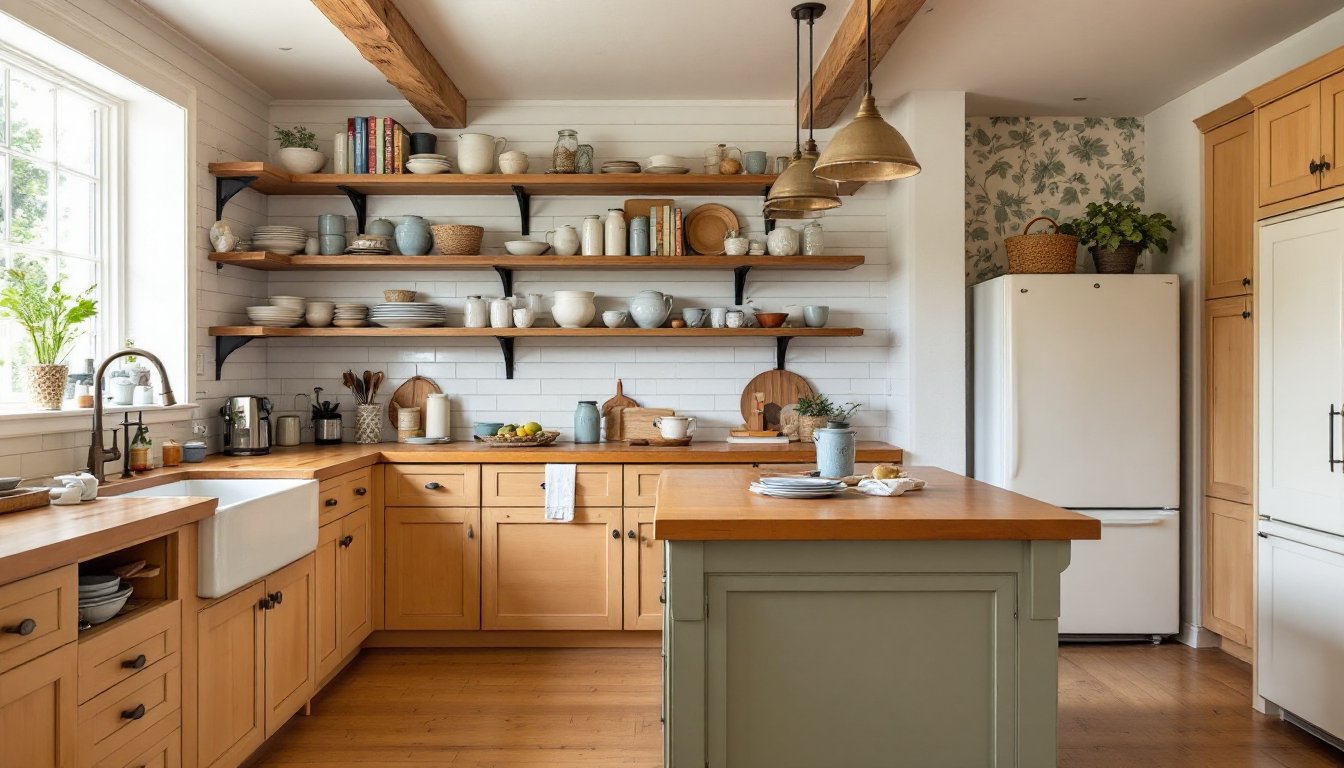
As of 2026, several directions are gaining traction. Warm minimalism combines clean lines and simple forms with natural wood tones, soft blacks, and matte finishes instead of high gloss. Open shelving (strategic, not everywhere) works when you actually display nice stuff and commit to keeping it tidy. Butler’s pantries or secondary prep areas are back, especially in homes with growing families or those who entertain.
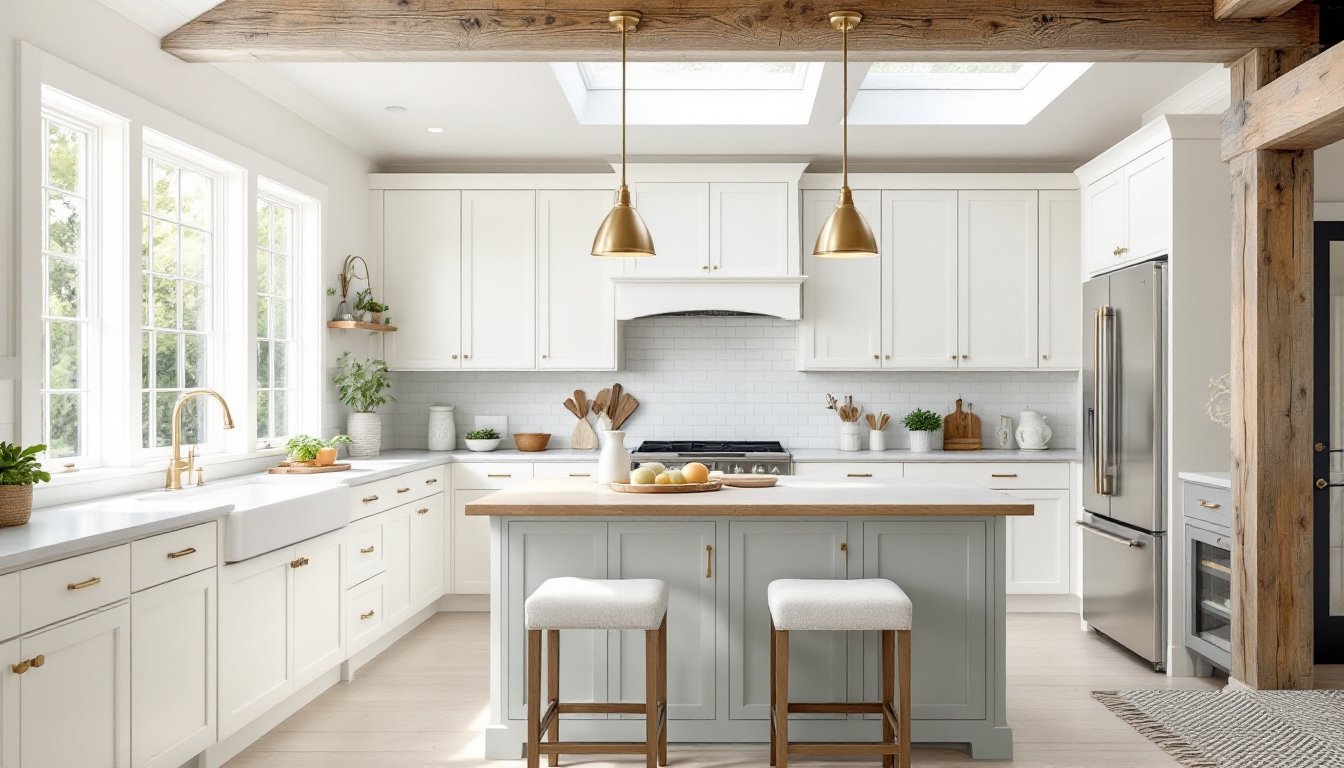
Color is becoming braver. Deep greens, soft blues, and warm earth tones now appear on cabinetry alongside classic white and gray. Metallics are shifting from shiny chrome to warm brass and matte black hardware. Many homeowners exploring interior design trends are moving away from the all-white kitchen, embracing depth and personality instead.
But trends fade. Choose a foundational style you love, use trendy elements in swappable places (hardware, bar stools, a rug), and keep structural choices, cabinet style, countertop color, tile layout, timeless enough that you won’t regret them in five years.
Plan Your Kitchen Layout and Workflow
Kitchen layout dictates how well you actually cook and live in the space. The classic work triangle, stove, sink, refrigerator, should form a rough triangle with no leg longer than 9 feet and none shorter than 4 feet. This minimizes steps during meal prep, though modern open-plan kitchens often blur this rule.
Consider traffic flow. If your kitchen is a thoroughfare to the back door, don’t put the dishwasher opening where people walk. If you cook a lot, the stove shouldn’t be in a corner. If it’s just you, a galley layout is efficient: if you cook with kids or a partner, you need counterspace and elbow room.
Measure your existing space carefully: wall lengths, window heights, door swing, appliance placements, and electrical outlets. Sketch a to-scale floor plan (graph paper or free online tools work fine). Plot your appliances and think about islands or peninsulas. An island needs at least 3–4 feet of clearance on all sides to be functional, not just a visual feature.
If you’re changing the layout, moving the sink, relocating the stove, or adding an island, you’re touching plumbing, electrical, and possibly gas lines. That’s professional work. Moving appliances within their current locations or adding an island in open space is more DIY-friendly, depending on electrical and plumbing runs.
Select Materials, Colors, and Finishes
Materials set the tone and determine durability. Your kitchen takes a beating, heat, moisture, spills, and constant use. Choose quality where it counts.
Cabinetry and Countertop Options
Cabinetry is the visual anchor. Solid wood cabinets (oak, maple, cherry) are durable and refinishable, but pricey. Plywood with a veneer is more affordable and still solid. Particleboard or MDF (medium-density fiberboard) are budget options, adequate if sealed well, but less resilient over time. Finish matters: solid stain, painted, or natural? Painted cabinets hide the grain and feel modern: natural finishes show character but need regular maintenance.
Countertops range from $3 to $40+ per square foot installed. Laminate is budget-friendly and comes in endless patterns, but scratches and water damage are permanent. Solid surface (quartz, engineered stone) is nonporous, durable, and low-maintenance, popular now for good reason. Granite and marble are beautiful but porous, need sealing, and stain if you spill wine or lemon juice. Butcher block is warm and tactile but requires oil and can warp in humidity. Wood-look quartz is a smart compromise: the warmth of wood, the durability of stone.
Backsplash is part function (splash protection behind the stove), part design. Tile is forgiving and allows pattern play. Subway tile is timeless but overdone. Larger formats, mixed sizes, or unique shapes (hexagons, mosaics) feel fresher. Grout color matters more than you’d think, light grout makes tile look open: dark grout adds definition.
Resources like The Kitchn showcase real kitchen designs and material reviews that’ll help you visualize combinations. Reputable design guides also outline 10 steps to a successful renovation, including material selection timelines and sourcing lead times.
Flooring needs to handle spills and foot traffic. Luxury vinyl plank (LVP) is affordable, waterproof, and looks like wood or tile. Porcelain tile is durable and easy to clean. Hardwood is beautiful but vulnerable to water (avoid directly under the sink). Sealed concrete is trendy but requires maintenance.
Maximize Storage and Functionality
A remodel is your chance to fix storage. Analyze what you actually own: dishes, pots, pantry items, small appliances, linens. Build storage around these things, not vague ideas of what a kitchen should hold.
Deep drawers beat upper cabinets for accessibility and visibility, you’ll use what you can see. Pullout shelves in lower cabinets turn the backs of your cabinets into usable space. Vertical dividers for baking sheets and cutting boards prevent that tangled mess. Corner solutions, lazy Susans, blind corner drawers, or pull-out racks, make dead zones work.
Pantry style matters. A walk-in pantry is luxurious but eats square footage. If space is tight, tall thin cabinets or a cabinet-depth pantry near the kitchen entry do the job. Open shelving works if you’re displaying matching jars and actually used items, not if it’s a place to hide clutter.
Think about appliance placement. A microwave over the stove (a microwave hood combo) frees counter space but is awkward for tall cooks. Counter placement is safer and easier to access. Small appliances (coffee maker, toaster, mixer) need dedicated homes, a rolling cart, a drawer with a charging cable port, or a closed shelf. When appliances scatter across the counter, the kitchen feels cramped.
Incorporate interior design tools and layout software to test cabinetry arrangements before you buy. 3D renderings help you avoid the “I didn’t realize it would look like that” moment. Build a mock-up with cardboard boxes in your kitchen space before finalizing orders, something always surprises you at actual scale.