Black bathrooms have moved from a design risk to a legitimate statement of sophistication. More homeowners are ditching the safe white subway tile and embracing rich, moody palettes that feel intentional rather than dated. The black bathroom trend reflects a broader shift toward bold interior design choices, one where personality and confidence matter more than playing it safe. Whether you’re drawn to sleek modern minimalism or a jewel-box feel, designing a black bathroom requires balancing drama with functionality. This guide walks you through the key decisions, from fixture selection to lighting strategy, so your black bathroom feels luxurious rather than cave-like.
Table of Contents
ToggleKey Takeaways
- Black bathroom design has evolved from a risky trend to a sign of luxury and sophistication, with modern ventilation and lighting technology making dark finishes both practical and visually stunning.
- Successful black bathroom design relies on strategic contrast—pairing black fixtures and walls with light countertops, mirrors, and accents to prevent the space from feeling cave-like.
- Layered lighting with warm color temperatures (2700K–3000K), dimmers, and vanity sconces is essential in black bathrooms to create both functionality and the luxurious retreat feeling the color palette promises.
- Material choice determines the feel and maintenance burden of a black bathroom; porcelain tile is most practical for wet areas, while natural stone like marble should be used strategically as accent pieces.
- In small black bathrooms, vertical elements, varying textures, and generous lighting create visual depth and prevent the space from feeling cramped, transforming a challenging design into an intentional statement.
Why Black Bathrooms Are Trending Now
Black has always signified luxury and sophistication, but for bathrooms, it’s a relatively recent evolution. Designers and homeowners used to see dark walls as a constraint, something to avoid in smaller or dimly lit spaces. That thinking has shifted, partly because modern construction standards ensure better ventilation, partly because lighting technology has evolved, and partly because bold design choices now drive home value and personal satisfaction.
The black bathroom trend aligns with broader design movements toward authenticity and intentionality. Instead of following generic trends, more people are creating spaces that reflect their lifestyle and personality. A well-executed black bathroom signals confidence, not recklessness. It shows that homeowners thought through the challenge of working with dark tones and solved it competently.
Market data backs this shift. Real estate professionals note that distinctive, well-maintained bathrooms are disproportionately influential in home sales decisions. A carefully designed black bathroom can become a signature feature that sets your home apart, particularly in contemporary or transitional styles.
The Psychology of Dark Colors in Bathroom Design
Dark colors affect how we perceive a space, both emotionally and physically. Black and deep charcoal tones evoke calm, focus, and luxury. In bathrooms, intimate, private rooms, these qualities align perfectly with the function of the space. A black bathroom becomes a retreat, not just a utility room.
Psychologically, dark colors create perceived intimacy and coziness, qualities that contradict the sterile feeling many bathrooms carry. This matters, especially as bathrooms increasingly serve dual purposes: hygiene spaces and personal sanctuaries. The psychological weight of black also encourages mindful design choices elsewhere in the room. With a bold backdrop, every fixture, accessory, and material selection becomes intentional.
That said, dark colors also absorb light, which is why lighting and finish choices become non-negotiable. Glossy black tiles reflect light differently than matte black walls, affecting how bright or moody the space feels.
Essential Elements of Black Bathroom Design
Building a black bathroom isn’t about painting every surface black, that’s a formula for disaster. Instead, think of black as your anchor, with supporting elements creating balance and visual interest.
Start with a clear hierarchy. Decide whether black will dominate walls, fixtures, or both. A classic approach uses black for walls and fixtures (faucets, hardware), with lighter countertops and flooring to ground the space. Another strategy uses black tile as an accent wall or feature behind the vanity, keeping walls neutral. The key is restraint: every black element should earn its place.
Texture prevents a black bathroom from feeling flat and lifeless. Consider mixing finishes: matte black walls paired with glossy black tile, or satin black fixtures combined with textured black marble. These variations catch light differently and add visual complexity without introducing conflicting colors.
Balancing Dark Fixtures and Light Accents
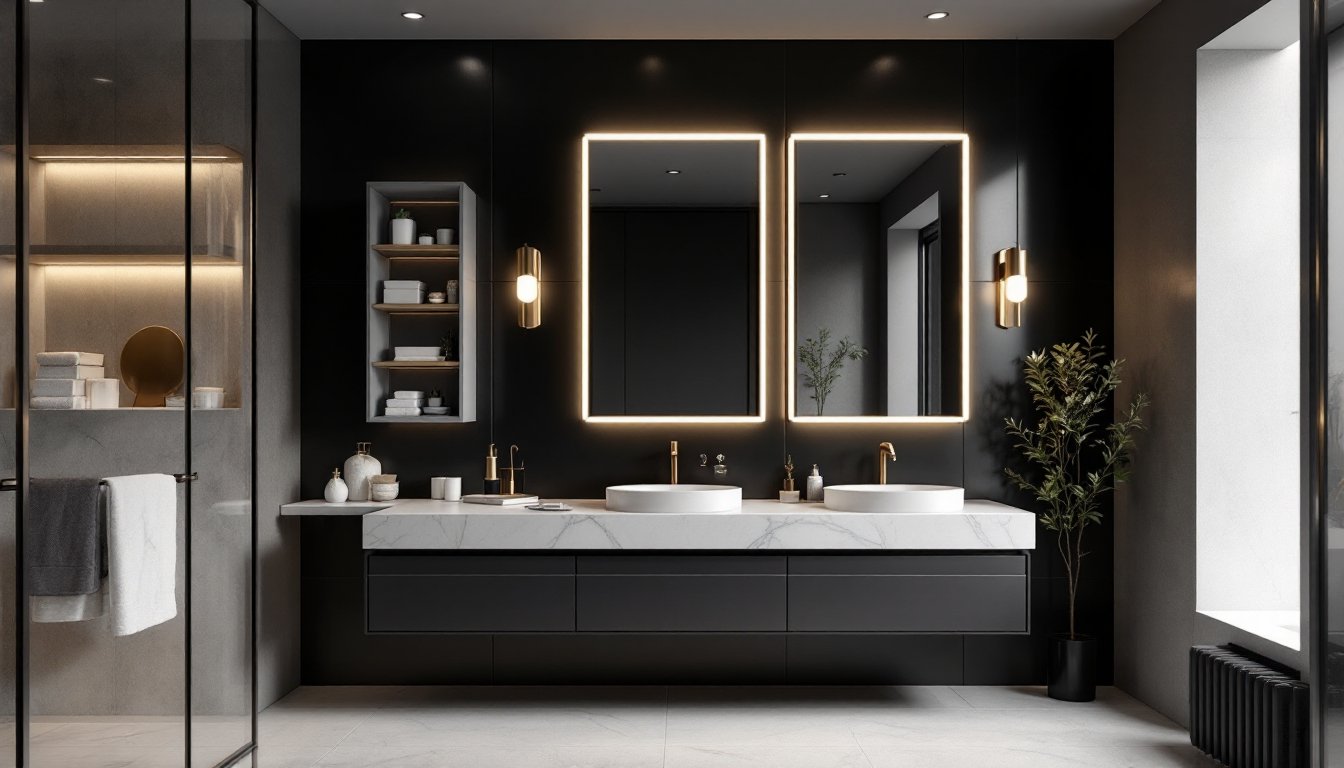
The most successful black bathrooms lean hard into contrast. Black fixtures, including faucets, towel bars, and vanity hardware, look stunning against white or light gray countertops and walls. This pairing solves a fundamental design problem: with too much black, the space becomes visually heavy: with contrast, black fixtures pop as intentional design choices.
Light accents serve multiple functions. White subway tile, pale marble, light wood shelving, or cream-colored grout all provide visual relief. These accents aren’t filler: they’re structural elements that make the black feel curated rather than overwhelming. Large mirrors with light frames reflect light and expand perceived space, a critical strategy in black bathrooms.
Gold, brass, or brushed nickel hardware paired with black tile or walls adds warmth and prevents the space from feeling sterile. Warm metallic tones humanize dark palettes better than chrome, which can feel cold alongside black. This is especially important in bathrooms, where warmth contributes to the sanctuary feeling described above. Popular design publications showcase this balance beautifully, demonstrating how professional designers handle the contrast equation.
Lighting Strategies for Black Bathrooms
Lighting is non-negotiable in a black bathroom. Without it, the space feels cave-like, regardless of how beautiful the finishes are. This is where black bathrooms demand more intentional planning than neutral ones.
Layered lighting prevents harsh, unflattering illumination. Combine overhead ambient lighting (recessed fixtures or a flush mount), task lighting (vanity sconces, which are essential for grooming), and optional accent lighting (LED strips behind mirrors or shelving). This layering gives you flexibility: brighter light for morning routines, softer light for evening decompression.
For overhead lighting in a black bathroom, recessed lights with warm color temperature (2700K to 3000K) are ideal. Cool-white light (4000K and above) can feel jarring against black surfaces. Warm tones complement dark finishes and add to the luxurious feel. Install dimmers on all lighting circuits so you can adjust intensity based on time of day and function.
Vanity lighting deserves particular attention. The standard above-mirror fixture works, but flanking sconces on either side of the mirror provide flatter, more flattering light for grooming tasks. Position vanity lights 36 to 40 inches apart and 60 inches above the floor for optimal results. Sconces with translucent shades diffuse light evenly, avoiding harsh shadows.
Mirrors amplify light, making them critical in dark bathrooms. A large mirror (at minimum 30 inches wide by 36 inches tall) multiplies available light and creates visual breathing room. Backlit mirrors or mirrors with LED frames add indirect illumination while serving as statement pieces. This strategy of using mirrors as light-multiplying tools is especially effective in black bathrooms where natural light may be limited.
Material Selection: From Tiles to Finishes
Material choices determine whether a black bathroom feels luxurious or harsh. Black tile, black paint, black stone, each material reads differently and requires different maintenance approaches.
Black ceramic or porcelain tile is the most practical choice for wet areas. Porcelain is denser and more water-resistant than ceramic, making it better for shower walls and flooring. Both materials hide soap scum and water spots better than many light alternatives, a practical advantage. Matte finishes feel contemporary and modern, while glossy finishes reflect light and can feel more dramatic. For bathrooms, matte is often safer because glossy tile can be slippery when wet.
Black marble or granite adds instant luxury but comes with maintenance considerations. These natural stones are porous and require regular sealing to prevent staining and water damage. If you choose natural stone, use it strategically, as a countertop or accent wall, rather than throughout the bathroom where moisture exposure is constant. The investment pays off visually but requires honest upkeep commitment.
For walls, black paint offers flexibility and lower cost than tile. Use a semi-gloss or satin finish in wet areas (around the shower) for moisture resistance: matte finishes work elsewhere. Always prime walls before painting, and use bathroom-specific paint formulated to resist mold and mildew. Ensure adequate ventilation during and after painting: off-gassing is particularly noticeable with dark paint in enclosed spaces.
Grout color matters more in a black bathroom than you’d expect. Black or dark gray grout with black tile creates a seamless, minimalist look. Light grout (white or light gray) creates visual lines and breaks up large expanse of dark tile, which some prefer for added visual interest.
Creating Visual Depth and Space in Small Black Bathrooms
Small bathrooms and black finishes are a challenging combination, but it’s absolutely achievable with smart material choices. The key is creating visual depth so the space doesn’t feel cramped.
Use varying textures and finishes to add dimension. Matte black walls paired with glossy black floor tile creates subtle variation. Incorporate lighter materials strategically: a white marble shelf, light wood vanity, or pale tile accent creates focal points that break up dark expanses. Interior design resources demonstrate this approach effectively, where small black bathrooms feel intentional rather than claustrophobic.
Vertical elements draw the eye upward, making ceilings feel higher. Install tall shelving, a full-height mirror, or vertical tile patterns to create upward visual movement. Keep flooring relatively clear of clutter: a small black bathroom needs every inch of visible floor space to maintain openness.
Lighting becomes even more critical in small black bathrooms. Maximize natural light if a window exists: avoid heavy curtains or treatments that block daylight. Artificial lighting should be generous, don’t scrimp on the number of fixtures or wattage. A bright, well-lit small black bathroom feels sophisticated: a dark one feels cramped.