Country kitchen design has made a strong comeback in recent years, blending nostalgic charm with the practical demands of modern cooking and gathering. Unlike the overly fussy farmhouse aesthetic that dominated social media a few years ago, today’s country kitchen leans into authentic materials, functional layouts, and honest craftsmanship. Whether you’re starting from scratch or refreshing an existing space, a country kitchen design offers warmth and character that never feels dated. This approach works equally well in urban apartments and rural homes, it’s about the details, not the square footage. The good news: you don’t need a massive budget or a full renovation to achieve this look.
Table of Contents
ToggleKey Takeaways
- Country kitchen design prioritizes authentic materials, functional layouts, and honest craftsmanship, celebrating patina and imperfection rather than polished uniformity.
- Wood, natural textures, and warm earth-toned color palettes form the foundation of country kitchen style, with muted neutrals and restrained accent colors creating timeless appeal.
- Country kitchen design works in any space—from urban apartments to rural homes—and doesn’t require a massive budget, with strategic updates like cabinet paint, hardware changes, and backsplash tiles offering dramatic transformations for $500–$1,500.
- Essential elements include Shaker-style or recessed-panel cabinetry, generous durable countertops, open shelving with steel brackets, and traditional fixtures with brass or oil-rubbed bronze finishes that develop natural patina.
- Lighting combines overhead ambient light, task lighting over work areas, and accent lighting with warm color temperatures (2700K–3000K) to create warmth without harsh shadows.
- A traditional two-handle bridge faucet with cross handles and simple hardware like cup pulls or ring pulls read authentically country, while single-handle gooseneck faucets and oversized decorative elements clash with the aesthetic.
What Defines Country Kitchen Style
Country kitchen design strips away the unnecessary and celebrates honest materials, purposeful design, and a lived-in aesthetic. It’s not about forced rusticity or theme-park quaintness, it’s about spaces that work hard and age beautifully.
At its core, country style prioritizes function over flash. Open shelving displays everyday dishes and glassware rather than hiding everything behind cabinet doors. Work surfaces are generous and durable. Flooring can take a beating. The kitchen becomes the heart of the home where people naturally gather, cook, and linger over coffee.
This style draws inspiration from traditional farmhouses, cottages, and rural homes where design choices were driven by what was available locally and what lasted longest. Wood takes center stage. Hardware is simple and honest. Colors are muted and tied to the earth and nature. The overall feeling should be inviting and unpretentious, a kitchen where you genuinely want to spend time, not a showroom you’re afraid to touch.
The distinction matters: country design celebrates patina and imperfection, while contemporary or minimalist kitchens aim for uniformity and polish. That worn beadboard wall or the slightly wavy edge of reclaimed wood? That’s not a flaw, that’s character.
Essential Design Elements and Color Palettes
Wood, Textures, and Materials
Wood dominates country kitchens, appearing in cabinetry, flooring, beams, and open shelving. The key is choosing authentic wood species rather than high-gloss veneers. Oak, pine, maple, and cherry all work, as do reclaimed options if your budget allows. Nominal 2-inch solid wood shelves read as more substantial than thinner stock and handle real weight without sagging.
Layering textures prevents the space from feeling flat. Combine smooth cabinetry with rough-hewn open shelving. Pair polished hardware with matte-finish paint. Mix smooth stone countertops with textured ceramic backsplashes. Stone tiles, granite, limestone, or soapstone, wear beautifully and age naturally without needing sealed finishes every few years (though some stones do benefit from sealing: check your local stone supplier’s recommendation).
Brick, exposed beams, and shiplap walls add depth and character. If structural beams aren’t available, faux beams add visual weight without load-bearing requirements. Shiplap can be added to an existing wall as a ½-inch thick overlay, just confirm your walls are sturdy enough for fastening every 16 inches vertically (matching wall stud spacing) before committing.
Flooring should be durable: wood, tile, or polished concrete all work. Avoid anything requiring delicate care, country kitchens are working spaces.
Warm Color Schemes That Work
Country palettes center on warm neutrals and earthy tones: creams, soft whites, warm grays, soft blacks, and muted browns. These colors never feel cold or sterile. Many homeowners pair neutral cabinetry with a single bold accent color, deep blue-green, sage green, or burgundy, on a single wall or lower cabinetry. The accent shouldn’t overwhelm: it should feel intentional and restrained.
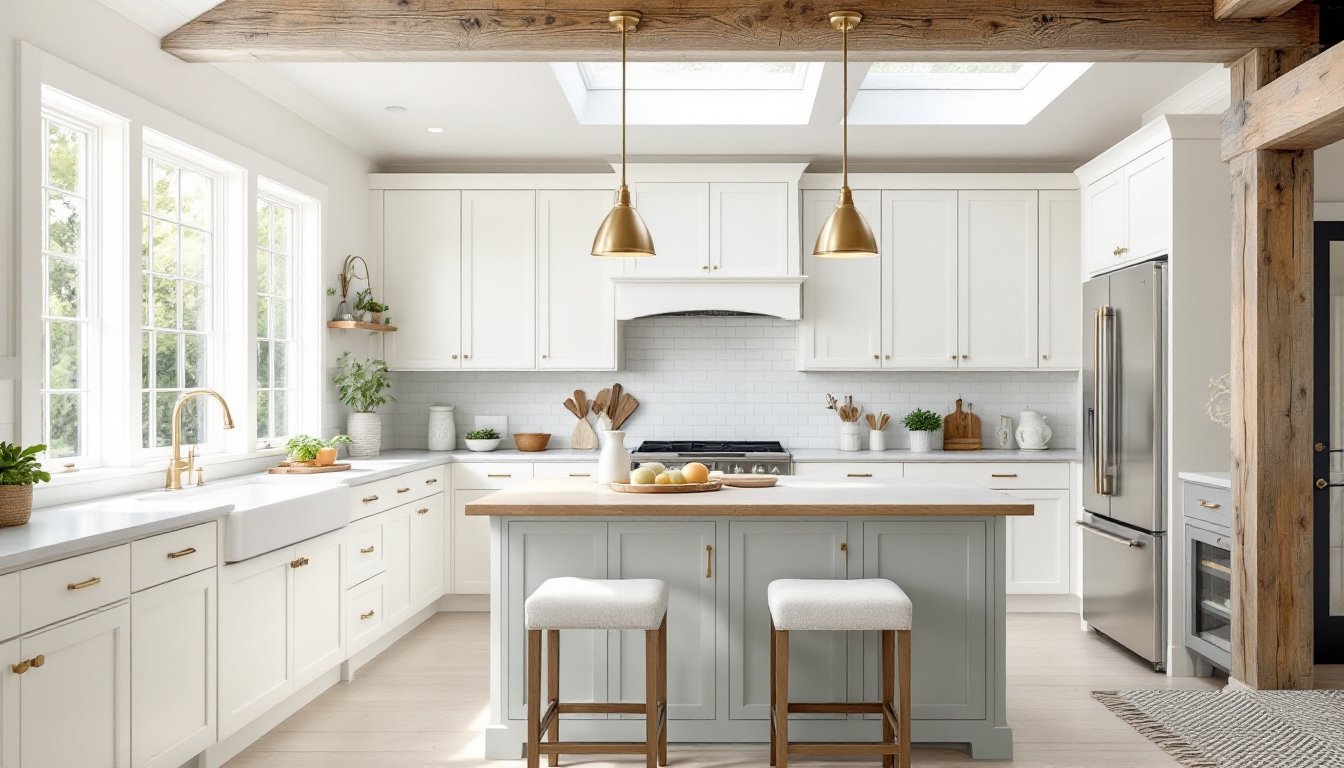
White cabinets work in country kitchens if they’re slightly warm-toned rather than crisp, clinical white. Sherwin-Williams Swiss Coffee or Benjamin Moore Cloud White deliver the right feel. Paired with wood countertops or butcher block, warm white cabinetry reads as classic rather than sterile.
Green appears frequently in country design, not neon or trendy sage, but muted, slightly grayed-down greens that echo garden inspiration without shouting it. Backsplash tiles in cream, soft gray, or terracotta add warmth without contrast that feels harsh. Wallpaper with subtle patterns (small florals, gingham, or grain textures) works in country kitchens if kept to one wall: full coverage can feel heavy and dated.
Cabinetry, Countertops, and Storage Solutions
Cabinetry is the biggest visual anchor in any kitchen, so choose thoughtfully. Shaker-style or recessed-panel cabinet doors read as classic country without looking theme-y. Inset doors (where the door sits flush with the frame rather than overlapping it) cost more but deliver a refined, intentional appearance. Frameless, European-style cabinets clash with country aesthetics: stick with framed cabinetry where the frame shows.
Finishes matter. Paint-grade cabinets (solid wood or plywood painted with primer and two coats of quality paint) deliver country charm at a lower cost than stained wood. Stain on pine or oak adds warmth: avoid cherry stain in country kitchens unless you want a more formal look.
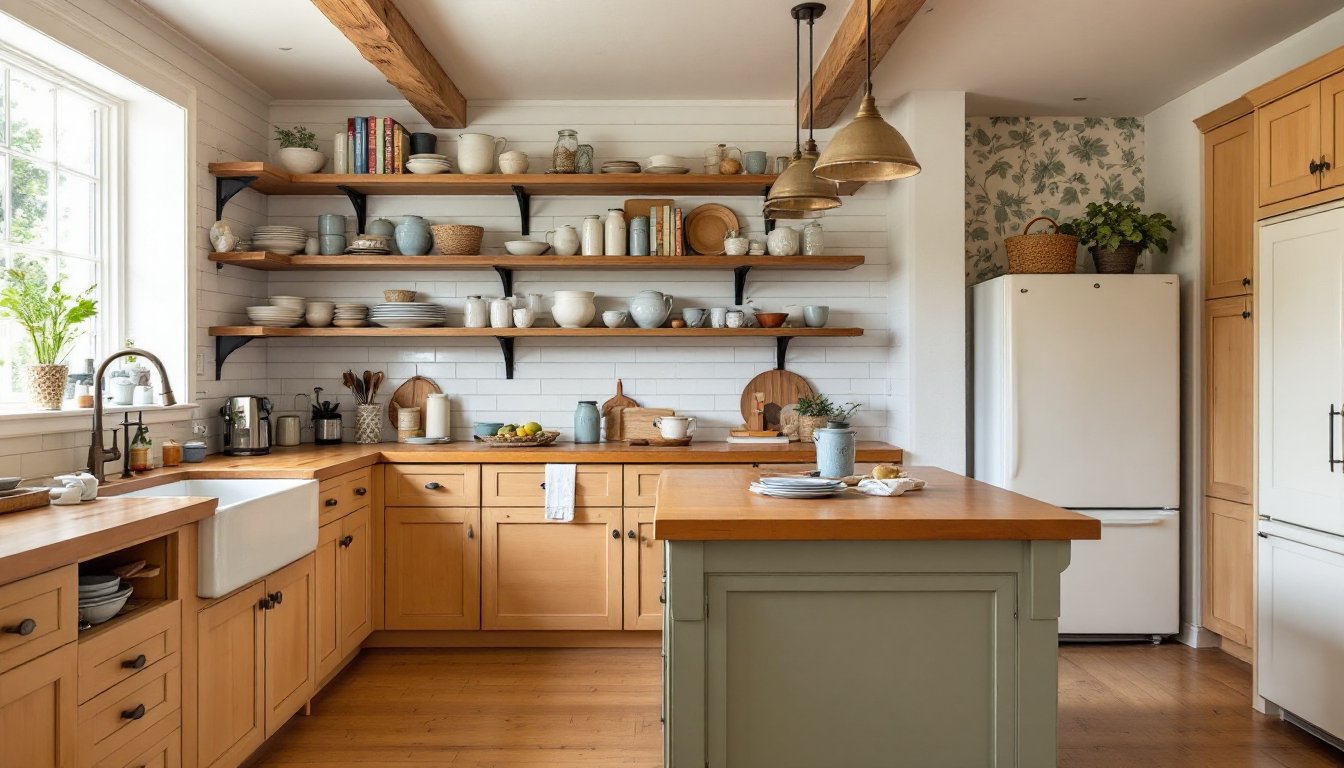
Open shelving becomes storage without doors. Steel brackets rated for your local building codes support shelves: galvanized metal reads more authentic than chrome. Stock each shelf with items you use regularly, this is functional storage, not decorative display. Mismatched vintage plates and glassware add character naturally.
Counterspace should be generous and durable. Butcher block (food-grade mineral oil finish, refreshed periodically) offers warmth and patina. Soapstone or slate tile develops character over time. Avoid glossy, high-maintenance surfaces, country kitchens embrace honest wear. Granite works if you choose warm-toned, not-too-polished slabs.
A large, sturdy island anchors the space and provides extra work surface and seating. Painted wood islands with open shelf storage or drawers feel more authentic than sleek, modern versions. Ensure the island width allows at least 36 inches of walking clearance on both sides (check your local building codes for exact requirements: standards vary by jurisdiction).
Drawers should outnumber cabinets when possible, easier access, better organization. Avoid soft-close mechanisms in country kitchens: traditional wood-on-wood or simple ball-bearing slides feel right.
Lighting and Fixtures for Rustic Warmth
Lighting shapes how warm or cold a country kitchen feels. Overhead fixtures should provide task lighting without harsh shadows. Pendant lights over the island work beautifully, choose fixtures with metal shades (iron, brass, or copper) rather than chrome or glass. Brass and aged copper develop patina naturally, which fits the country aesthetic.
Underlighting under upper cabinets eliminates shadows on the work surface and can be tucked away so it’s not visually prominent. LED strip lights with warm color temperature (2700K–3000K) deliver function without the cool, clinical feel of bright white bulbs. Install them 6–8 inches from the front edge of the cabinet and aim the light downward onto the countertop.
A combination of fixtures works best: overhead ambient light, task lighting over work areas, and softer accent lighting. Dimmer switches let you adjust intensity based on whether you’re prepping dinner or hosting a casual gathering.
Faucet and hardware choices significantly impact the overall feel. A traditional two-handle bridge faucet with a curved spout and cross handles reads immediately country. A single-handle gooseneck faucet has modern undertones even though its function. Brass or oil-rubbed bronze finishes develop patina: polished chrome stays bright forever (which may not be the look you want). Knobs and pulls should be simple: cup pulls, ring pulls, or minimal bail handles. Avoid anything oversized or fussy.
Budget-Friendly Ways to Transform Your Kitchen
A full country kitchen renovation costs anywhere from $25,000 to $75,000+ depending on your region, whether you’re keeping or replacing major appliances, and material choices. That said, meaningful transformations don’t require gutting everything.
Start with paint. Cabinet paint costs $200–$500 for materials (primer, two coats of cabinet-grade paint, hardware brushes) and transforms the space completely. Paint the lower cabinets a muted green or blue and keep uppers light, instantly more interesting. Shaker-style hardware replacements cost $3–$15 per knob, adding up quickly across a full kitchen but creating dramatic change.
Open shelving conversion costs far less than replacing cabinets. Removing cabinet doors, reinforcing shelves, and adding new hardware runs $500–$1,500 depending on how many shelves you’re converting. Steel brackets and wood shelves from a local supplier cost less than custom cabinetry.
Backsplash tiles dramatically change the visual weight and color balance. Subway tiles or small hexagon tiles in cream or terracotta cost $5–$15 per square foot installed (material and labor combined, though DIY installation saves labor). A typical 4-foot by 2-foot backsplash runs $400–$600 installed.
Countertop overlays (resurfacing existing counters with tile or wood) cost less than replacement. Butcher block underlayment costs roughly $40–$60 per linear foot: installation adds cost but is manageable as a weekend project if you’re careful with measurements and sealing.
Faucet and light fixture upgrades deliver high visual return for modest investment. A quality country-style faucet runs $150–$400, and replacing one or two pendant lights costs $50–$200 each. Browse real examples on Remodelista’s country kitchen collection for inspiration on which elements matter most for your space.
Appliance choices matter, a stainless steel fridge and range read modern: vintage-style or white appliances fit country better. Budget $1,500–$3,000 for solid mid-range appliances that blend rather than clash. Vintage pieces found at auctions or salvage yards add authenticity if they function reliably.